
Moises, Felipe, and César (names changed) worked for a labor contractor doing framing work for large construction projects. They worked long hours—six days a week—building framing pieces off site and then installing them onsite. Over time, they became concerned about their pay: they weren't being paid for all their hours, weren't receiving an overtime premium, and had learned from others that they should be receiving higher wages because it was a government-funded project.
When they confronted the boss, he fired them for a drummed-up reason— returning a few minutes late from a lunch break.
The workers went to the general contractor to report the unpaid wages and wrongful termination. For many workers, this is a dead end: many general contractors often avoid liability for subcontractor wage theft unless the workers can prove “joint employment”, a complex legal process that can drag on for years.
But Moises, Felipe, and César had another option. Because this was a federal prevailing wage job, Biden’s U.S. Department of Labor was able to hold the general contractor accountable for their unpaid wages—bringing more resources to the table and creating a stronger incentive for the subcontractor to pay up.
That kind of accountability has been rare. But now, it’s about to become much more common in Oregon.
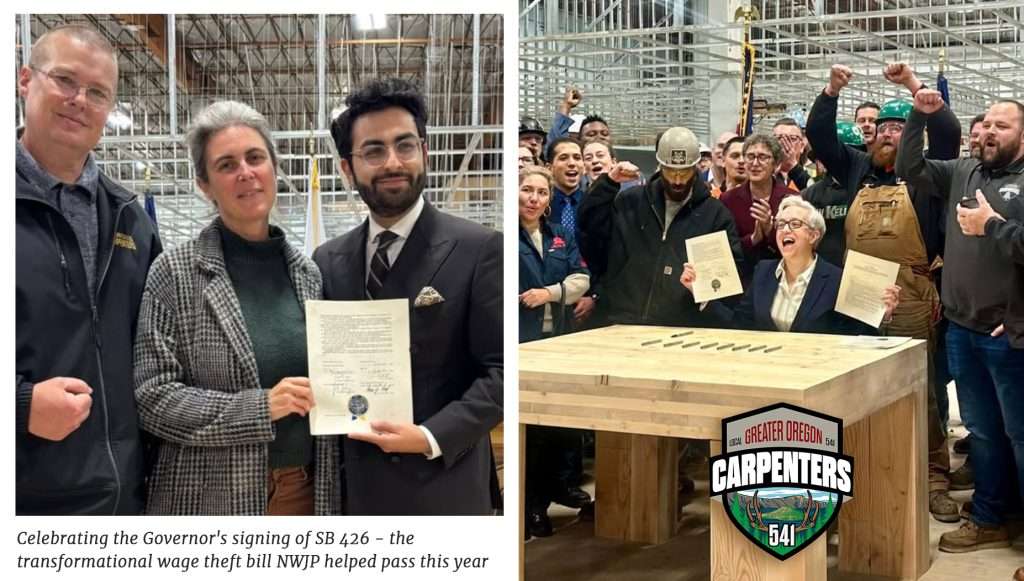
This year, NWJP partnered with the Western States Carpenters Union to pass Senate Bill 426. It was an uphill fight, but the Carpenters Union led an incredible legislative campaign, focused on workers’ experiences. The new law requires general contractors and large property owners to take responsibility for wage theft that happens on their projects.
 This year, NWJP partnered with the Western States Carpenters Union to pass Senate Bill 426. It was an uphill fight, but the Carpenters Union led an incredible legislative campaign, focused on workers’ experiences. The new law requires general contractors and large property owners to take responsibility for wage theft that happens on their projects.
After workers give notice of pay issues, if the issues are not addressed, workers can now bring an action against those at the top—general contractors and property owners that have the real power and resources. These powerful entities will now have an incentive to stop hiring low-road contractors who rely on wage theft as a business model.
The law also may incentivize hiring union contractors, since workers covered by collective bargaining agreements with grievance procedures already have strong protection in their union contract.
With this new law, many more workers in Oregon will be able to hold general contractors accountable—just like Moises, Felipe, and César did.
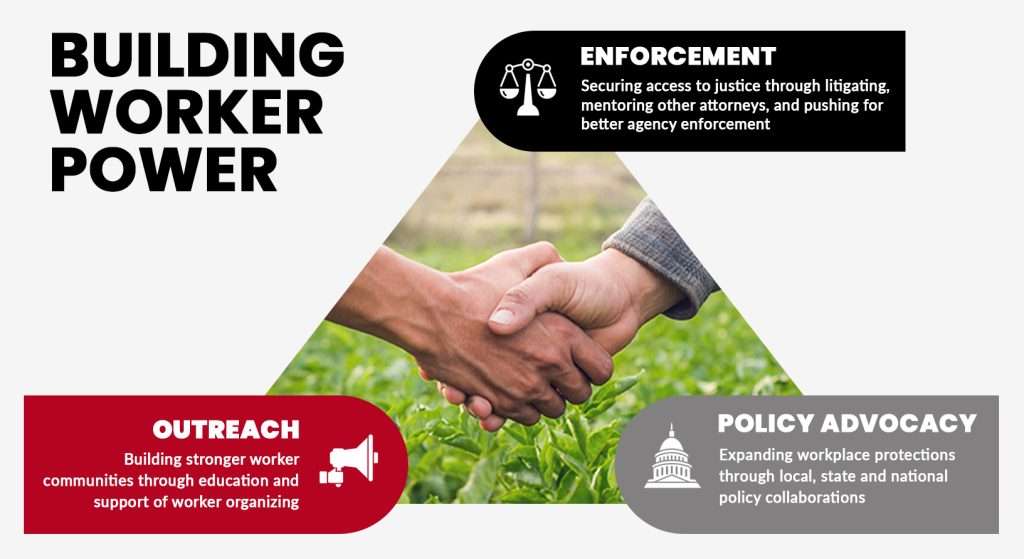
Thanks to the advocacy work of our powerful workers’ rights coalition, a long-standing problem in the construction industry is finally being addressed. But the work is not over. We will need to make sure that this new tool is used properly. We’re already getting the word out to workers about the law, starting with a community training next week.